Americans over 50 are discovering:
Why Memory Changes After 50 — And the 7-Minute Habit Many Adults Over 50 Are Trying
Helps Them Feel Sharper After 50
It starts small. You walk into a room and forget why you're there. A name you've known for years sits on the tip of your tongue but won't come out. You read the same paragraph three times because nothing sticks.
If you're over 50, you've probably told yourself this is just "normal aging." Your doctor may have said the same thing. And for decades, that's what the medical establishment believed—that cognitive decline after midlife was inevitable, like gray hair or stiff joints.
But a growing body of neuroscience research is telling a different story. And what some researchers are finding may change the way many older Americans think about their brain health.
It May Not Be Your Age. It May Be Your Brainwaves.
Researchers studying cognitive performance across age groups have observed something interesting: the memory challenges, mental fog, and difficulty focusing that many people experience after 50 may not be caused by brain cells dying or irreversible neurological damage.
Some researchers suggest they may be linked to a measurable shift in brainwave activity.
Specifically, the brain's production of theta waves—a low-frequency electrical pattern operating between 4 and 8 Hz—tends to decline as we age. Theta waves are believed to play a role in memory consolidation, deep recall, and the kind of fluid thinking that lets you pull a name, a word, or an idea from storage without effort.
In other words, your brain may not be broken. Some researchers believe it may simply be stuck in the wrong gear—and that certain approaches may help shift it back.
Why Theta Waves Disappear With Age
When you were younger, your brain naturally cycled through theta-dominant states throughout the day. That's why learning felt easy in your 20s and 30s. New information just seemed to stick. Names, dates, directions, conversations—your brain filed them away without conscious effort.
But after 50, several factors converge to suppress theta activity:
Chronic stress accumulation. Decades of career pressure, family responsibilities, and financial concerns train the brain to stay in high-frequency beta waves—the "fight or flight" mode that's useful in emergencies but devastating when it becomes your default state.
Sleep architecture changes. The deep sleep phases where theta waves are most active become shorter and less frequent with age. Even if you're sleeping eight hours, you may be getting far less restorative theta time than you did at 35.
Information overload. The modern world bombards the aging brain with more stimulation than it was ever designed to handle. Constant news, notifications, and screen time keep the brain locked in anxious, high-frequency processing.
In one study, researchers observed that subjects with the lowest theta wave activity scored notably worse on memory recall tests than those with healthier theta levels—regardless of age. In some cases, a 72-year-old with strong theta activity outperformed a 55-year-old without it.
The implication, according to some researchers: it may not be about how old your brain is, but about which brainwaves are most active.

What Your Brain Is Actually Doing
To understand why this matters, it helps to know the basics of brainwave activity. Your brain is constantly producing electrical signals that fall into distinct frequency bands:
Beta waves (13–30 Hz) dominate when you're actively thinking, analyzing, or stressed. They're the "working" frequency—useful for tasks that require concentration, but when they become dominant (as they do under chronic stress), they crowd out everything else. The result: racing thoughts, poor sleep, and difficulty focusing.
Alpha waves (8–13 Hz) appear when you're relaxed but alert. They're the bridge between active thinking and deeper states. Many people over 50 don't produce enough alpha waves either, which is why relaxation itself becomes difficult.
Theta waves (4–8 Hz) are believed to play an important role in memory and cognitive clarity. Researchers suggest they may be involved in encoding new memories, retrieving old ones, and making the kind of intuitive connections that feel like "sharp thinking." They're dominant during light sleep, deep meditation, and moments of creative insight. After 50, many people's theta production appears to decline.
Delta waves (0.5–4 Hz) are the slowest waves, active during deep dreamless sleep. They're important for physical restoration but don't directly affect cognitive performance during waking hours.
The idea is straightforward: without adequate theta activity, the brain may struggle to efficiently store or retrieve information. Think of it like trying to save files to a hard drive running in a limited mode. The hardware may be fine—it may just need the right kind of support.
"She Was Starting to Think Something Was Really Wrong"
Barbara Kessler taught high school English for 31 years in Columbus, Ohio. She was the teacher who remembered every student's name by the second day of class. She could recite Shakespeare passages from memory. Her mind was her greatest asset.
Then, around age 55, things started to change.
It was little things at first, Barbara recalls. She would be telling a story and completely lose the word she needed. Not an obscure word—something basic, like "chandelier" or "recommendation." It would just vanish. She would stand there mid-sentence feeling embarrassed.
The problem got worse after she retired at 57. Without the daily mental stimulation of teaching, the fog rolled in thicker. She would forget what she went to the grocery store for. She would re-read emails three times. Her husband noticed she was asking him the same questions she had asked an hour earlier.
Barbara says she tried everything—crossword puzzles, Sudoku, brain training apps, fish oil, ginkgo, B vitamins. Nothing made a real difference. She was starting to genuinely worry that it was the beginning of something serious.
Her daughter, a nurse practitioner, came across research on theta brainwave decline in aging adults. She sent Barbara an article about audio-based brainwave entrainment—the use of specific sound frequencies to guide the brain back into theta-dominant states.
Barbara admits she was skeptical at first. It sounded too simple. But her daughter is not someone who falls for fads, and the research she showed her was from real journals. Barbara figured she had nothing to lose—it was only seven minutes.
She started listening to the theta audio track every morning with her coffee.
The first thing she noticed, maybe three or four days in, was that she was sleeping better. Deeper. She would wake up feeling actually refreshed instead of groggy. By the second week, her word recall started improving. She was in the middle of a conversation with a neighbor and realized she hadn't paused or searched for a word once. That hadn't happened in months.
By week four, Barbara says she felt more like herself. The fog seemed to lift. She could follow conversations more easily, remember what she read, and think more clearly. Her husband told her, "You seem like you're back"—and she says that meant more to her than any test result could.
How Brainwave Entrainment Works
The method Barbara tried is based on a neurological principle called brainwave entrainment. When the brain is exposed to rhythmic auditory stimuli at a specific frequency, it tends to synchronize its own electrical activity to match. This process has been studied in peer-reviewed research since the 1970s.
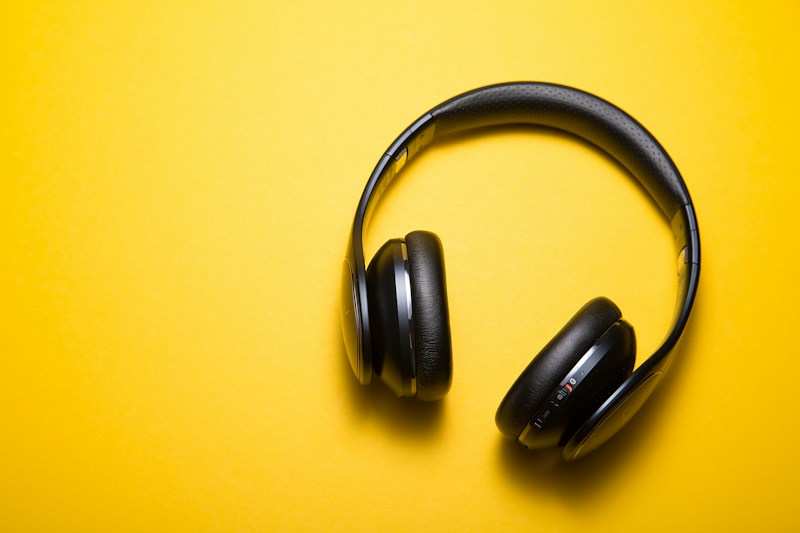
The audio track uses a combination of binaural beats and isochronic tones calibrated to the theta frequency range. When you listen through headphones, the sound patterns are designed to gently guide your brain from its default high-frequency beta state toward theta—the frequency associated with memory, recall, and cognitive clarity.
The process takes approximately seven minutes. There's no meditation technique to learn, no mental exercises to perform. You simply listen. The idea is that synchronizing with rhythmic patterns is something the brain already knows how to do—it may just need the right input.
With consistent daily use, some researchers suggest the brain may begin to re-establish stronger theta pathways, potentially making it easier to access this state naturally throughout the day.
What to Expect
Try It Risk-Free
The Genius Wave theta audio program is available at a special introductory price of $39. That's less than a single bottle of the premium brain supplements that line pharmacy shelves—many of which have limited clinical evidence behind them.
The program comes with a satisfaction guarantee. If you don't feel it's making a difference for you, you're covered.
No pills. No prescriptions. No complicated routines. Just seven minutes a day with a pair of headphones.
ADVERTISING DISCLOSURE: This website and the products & services referred to on this site are advertising marketplaces. This is an advertisement and not an actual news article, blog, or consumer protection report.
This page receives compensation for clicks on or purchase of products featured on this site. Individual results may vary. Results are not guaranteed and may differ from the testimonials shown.
These statements have not been evaluated by the Food and Drug Administration. This product is not intended to diagnose, treat, cure, or prevent any disease. If you are pregnant, breastfeeding, taking medications, or have a medical condition, consult your healthcare provider before use.
Any photographs of persons used on this site are models. The owner of this site and the products & services referred to on this site only provides a service where consumers can obtain information.
© 2026 Sharp After 50. All rights reserved. | Privacy Policy | Terms of Use | Contact
3 Comments